Aluminized Silicon Steel Sheet vs. Stainless Steel: Full Performance Comparison | MESCO

Aluminized Silicon Steel Sheet vs. Stainless Steel: Full Performance Comparison | MESCO

Summary

A comprehensive, dimension-by-dimension comparison of aluminized silicon steel and stainless steel — heat resistance, corrosion, cost, weldability, formability and more. MESCO factory.

Aluminized Silicon Steel Sheet vs. Stainless Steel: Full Performance Comparison | MESCO

Aluminized silicon steel vs stainless steel: which one should you specify?

Direct answer: choose aluminized silicon steel below 550°C when cost and heat reflection matter; choose stainless steel above 550°C, in chloride or chemical environments, or where exposed cut edges must survive. The table below compares both materials across nine performance dimensions; each section gives the practical verdict.
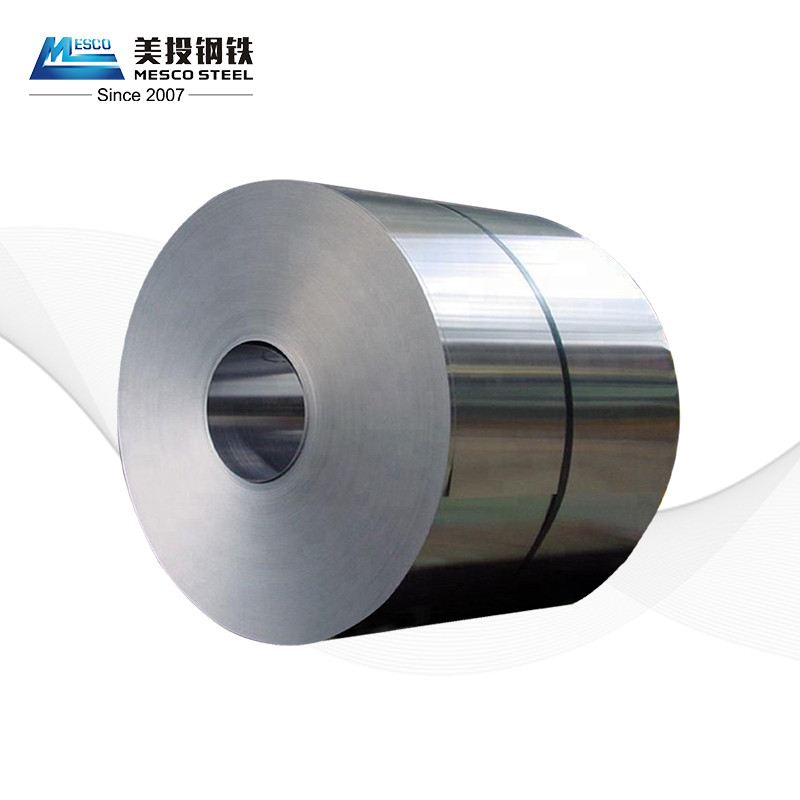
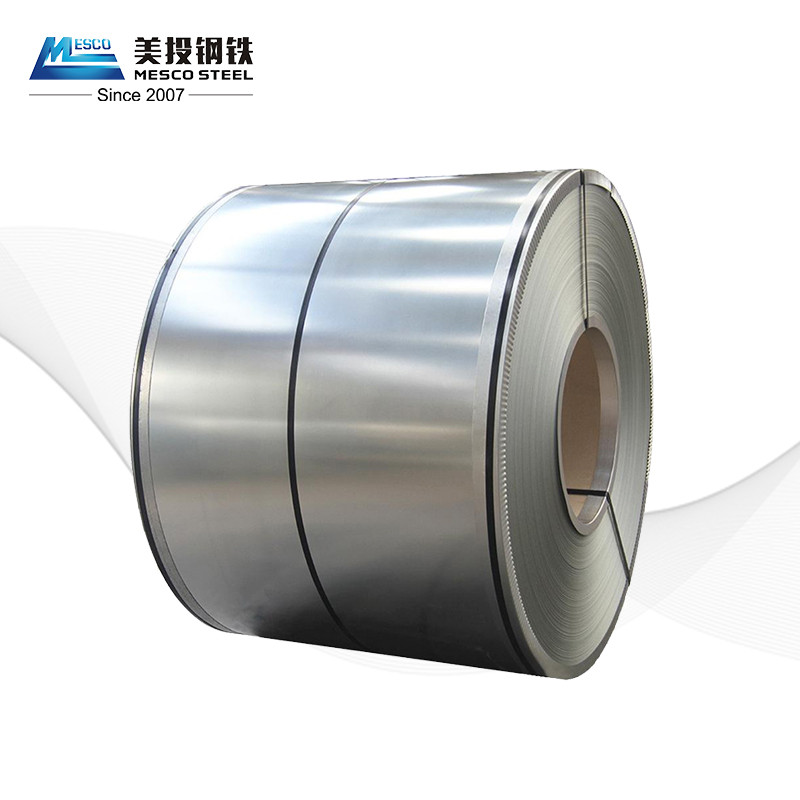
Choosing between aluminized silicon steel sheet and stainless steel is one of the most consequential material decisions in industrial engineering. Both materials offer compelling advantages; both have real limitations. The wrong choice leads to premature failure, excessive cost, or fabrication problems that could have been avoided with better material intelligence. At MESCO, we supply both aluminized silicon steel sheet and stainless-clad products, and our engineering team works with customers daily to select the optimal material for their specific application. This article provides a rigorous, objective comparison across nine performance dimensions — the most comprehensive analysis available for buyers and engineers making this decision.
Performance Dimension
Aluminized Silicon Steel (AS
Stainless Steel (304 / 316)
Heat Resistance
550°C continuous / 677°C peak
870°C+ (Alloy 321)
Corrosion Resistance
 Good — moderate environments
Superior — all environments
Thermal Conductivity
50–73 W/m·K (high)
13–16 W/m·K (low)
Radiant Heat Reflectivit
>80% reflected below 427°C
30–40% reflected
Mechanical Strength
Moderate (substrate grade)
High tensile strength
Formability
Excellent — bend, stamp, roll
Harder to form (work hardening)
Weldability
Requires coating repair post-weld
Excellent — no coating concern
Material Cost
30–60% lower than SS
Significantly higher
Aesthetic / Surface
Matte metallic, may discolor
Polished, maintains appearance

Which material handles heat better — aluminized silicon steel or stainless steel?

Stainless steel holds the higher ceiling: grade 304 is rated to about 870°C and titanium-stabilized 321 to roughly 900°C, while aluminized silicon steel to ASTM A463 Type 1 is rated for 550°C continuous service with intermittent peaks to 677°C. Below 550°C, aluminized steel performs equivalently at far lower cost.

Heat resistance is the dimension most often cited as the decisive advantage of aluminized silicon steel. The aluminum-silicon alloy coating (5–11% silicon) forms a dense aluminum oxide (Al₂O₃) barrier when exposed to elevated temperatures. This oxide layer is self-healing, thermally stable, and acts as an effective barrier against further oxidation. The result: MESCO's aluminized silicon steel sheet, produced to ASTM A463 Type 1, maintains full coating integrity at continuous service temperatures up to 550°C (1,022°F) and tolerates intermittent spikes up to 677°C (1,250°F).
Standard austenitic stainless steel (Grade 304) is rated for continuous service up to approximately 870°C (1,598°F), with Grade 321 (titanium-stabilized) usable up to 900°C. For applications above 550°C — such as exhaust manifolds in high-performance engines or industrial furnace internals — stainless steel has the thermal edge. For the vast majority of exhaust systems, heat exchangers, oven liners, and HVAC components operating below 550°C, aluminized silicon steel performs equivalently at a significantly lower cost.
▶ Dimension Verdict: Aluminized Steel below 550°C · Stainless Steel above 550°C
For the majority of commercial applications (automotive exhaust, HVAC, appliances), aluminized silicon steel meets the thermal requirement. Choose stainless only when continuous service exceeds 550°C.

Which material resists corrosion better in real service?

Stainless steel wins, decisively in chloride and chemical environments: its chromium oxide passive layer self-repairs, and 316 adds molybdenum against pitting. Aluminized steel relies on the coating as a barrier — strong in dry heat and at heavy weights (AS240/AS300 exceed 4,000 hours salt spray), but exposed cut edges and welds will rust without protection.

Corrosion resistance is where stainless steel holds its most decisive advantage. Stainless steel's chromium content (minimum 10.5%, up to 25% in high-grade alloys) forms an invisible, self-repairing chromium oxide passive layer. This layer is stable across a wide range of chemical environments and regenerates when damaged — as long as sufficient oxygen is present. Grade 316 adds molybdenum, which dramatically enhances resistance to chloride-induced pitting corrosion, making it the standard choice for marine, coastal, and chemical processing environments.
Aluminized silicon steel's corrosion protection relies entirely on the integrity of the aluminum-silicon coating as a physical barrier. In intact form, the coating provides excellent performance in dry heat environments, moderate humidity, and light chemical exposure. MESCO's AS240 and AS300 heavy-coat grades extend this to aggressive outdoor and pipeline insulation environments, achieving salt spray test performance exceeding 4,000 hours. However, if the coating is mechanically damaged — at cut edges, bends, or weld zones — the underlying carbon steel substrate is exposed and will rust without additional treatment.
The key practical implication: in applications where cut edges are sealed (formed tubes, enclosed oven components), aluminized steel's corrosion performance approaches stainless. In applications with exposed cut edges in wet environments, additional edge protection or a higher coating weight (AS240/AS300) is required.
▶ Dimension Verdict: Stainless Steel — particularly in marine, chloride, or chemical environments
Aluminized steel is adequate for moderate corrosion environments, especially in enclosed or high-temperature applications. Heavy-coat grades (AS240, AS300) from MESCO close the gap for industrial insulation jacketing.

Does thermal conductivity favor aluminized steel?

Yes, by roughly four to five times: aluminum-silicon coated steel conducts about 50–73 W/m·K against 13–16 W/m·K for stainless. That means faster, more even heat spreading — an advantage in heat exchangers, oven walls and heat shields, and a drawback where insulation is wanted.

This dimension is consistently underappreciated in material selection discussions. Thermal conductivity — the rate at which a material transfers heat — has significant implications for heat exchanger design, oven performance, and energy efficiency. Aluminized silicon steel, with a carbon steel substrate, exhibits thermal conductivity of 50–73 W/m·K depending on grade. Stainless steel, an alloy with significant chromium and nickel content, has substantially lower thermal conductivity at 13–16 W/m·K — roughly one-fifth that of aluminized steel.
For heat exchanger applications, this difference is significant. An aluminized steel heat exchanger transfers heat to the working fluid more efficiently than an equivalent stainless steel design, which may enable a thinner wall specification or a more compact overall design. For oven and appliance applications where uniform heating and rapid temperature response are priorities, aluminized silicon steel's higher thermal conductivity is a meaningful advantage.
▶ Dimension Verdict: Aluminized Silicon Steel — clear advantage for heat transfer applications
 Where thermal efficiency matters — heat exchangers, oven liners, boiler components — aluminized silicon steel's conductivity advantage translates directly to better product performance and energy efficiency.

Which material reflects more radiant heat?

Aluminized steel reflects more than 80% of radiant heat below 427°C, against 30–40% for stainless steel. For heat shields, oven liners and reflective components, that difference keeps surrounding parts cooler and reduces energy loss — which is why aluminized sheet dominates underbody heat shielding.

The bright metallic surface of aluminized silicon steel reflects more than 80% of incoming radiant heat at temperatures up to 427°C. This property is distinct from thermal conductivity and independent of it: a material can be both highly conductive (good for heat exchangers) and highly reflective (good for heat shields), which aluminized steel is. Stainless steel, with a surface emissivity of 0.6–0.9 depending on finish, reflects only 30–40% of radiant heat, absorbing and re-radiating the rest.
This makes aluminized silicon steel the standard material for automotive underbody heat shields, industrial radiant heat reflectors, and oven door assemblies. The reflectivity advantage also contributes to reduced heat gain on insulated pipelines, improving the thermal efficiency of the insulation system — one of the key reasons MESCO's AS240 and AS300 aluminized steel has displaced stainless steel in many pipeline jacketing specifications.
▶ Dimension Verdict: Aluminized Steel — decisive advantage for heat shield and reflector applications
No stainless steel grade approaches the radiant heat reflectivity of aluminized silicon steel. For heat shield design, this property alone often determines material selection.

Which material offers higher mechanical strength?

Stainless steel, particularly 304 and 316 austenitic grades, delivers higher tensile and yield strength and better performance at temperature. Aluminized steel's mechanical properties are set by the carbon steel substrate, so load-bearing structural parts should generally be specified in stainless or structural carbon steel instead.

Stainless steel, as an alloy with significant chromium, nickel, and in some grades molybdenum content, typically offers higher tensile strength than aluminized carbon steel. Grade 304 stainless steel has a minimum tensile strength of 515 MPa and yield strength of 205 MPa. Grade 316 is similar. High-strength stainless alloys like 17-4PH reach tensile strengths exceeding 1,000 MPa.
Aluminized silicon steel sheet, as a coated carbon steel, achieves tensile strength in the range of 270–360 MPa for commercial and structural grades. The aluminum-silicon coating contributes negligibly to the mechanical properties — strength is entirely a function of the carbon steel substrate grade. For structural applications where weight-bearing capacity or impact resistance is critical, stainless steel has an advantage. For the majority of sheet metal forming applications — exhaust components, appliance panels, HVAC casing — the mechanical properties of aluminized silicon steel are more than adequate.
▶ Dimension Verdict: Stainless Steel — higher baseline tensile and yield strength
For structural load-bearing components, stainless steel's strength advantage is relevant. For non-structural formed sheet metal applications, the mechanical properties of aluminized silicon steel are fully adequate.

Which material is easier to form and fabricate?

Aluminized silicon steel forms more easily — it bends, stamps, rolls and deep-draws like the low-carbon substrate beneath it. Stainless steel work-hardens as it deforms, requiring higher press forces, more springback compensation and interstage annealing for deep draws.

Aluminized silicon steel sheet is noted for its excellent formability, particularly in the DX53D and DX54D deep-drawing grades available from MESCO. The aluminum-silicon coating is ductile enough to accommodate significant plastic deformation without flaking or cracking, supporting bending radii as tight as 1T (one times the material thickness). Roll forming, stamp pressing, hydroforming, and brake forming are all feasible without special tooling adjustments.
Austenitic stainless steel (304, 316) work-hardens significantly during cold forming, meaning that progressive forming operations require higher forces as the material strengthens. Ferritic grades (409, 439) are more formable. In general, aluminized silicon steel is easier and less expensive to form into complex shapes, with lower tooling wear and lower press force requirements — particularly relevant for high-volume automotive and appliance stamping operations.
▶ Dimension Verdict: Aluminized Silicon Steel — easier and more economical to form at high volume
For stamped, rolled, or bent components manufactured in volume, aluminized silicon steel's superior formability and lower tooling wear translate to real cost and throughput advantages.

How does weldability differ between the two materials?

Stainless steel welds cleanly with no coating to restore. Aluminized steel can be welded, but the aluminum-silicon coating burns back around the weld zone, so joints need post-weld protection (coating repair or a protective paint system) to avoid premature edge corrosion.

Stainless steel is straightforward to weld using TIG, MIG, or resistance welding methods with appropriate filler materials. The chromium oxide passive layer re-forms in the heat-affected zone, maintaining corrosion resistance across the weld — provided heat input is controlled to avoid sensitization (carbide precipitation) in 304 grade, which is prevented by using low-carbon 304L or stabilized 321 grade.
Aluminized silicon steel presents a specific weldability challenge: the aluminum-silicon coating burns away in the weld zone and heat-affected zone, exposing the underlying carbon steel to direct corrosion. MIG and TIG welding are feasible with appropriate technique, but the weld area must be treated after welding — typically with a zinc-rich or aluminum-rich cold galvanizing compound — to restore corrosion protection. For applications where welded joints will be exposed to corrosive conditions, this additional step is essential and represents a real additional fabrication cost.
▶ Dimension Verdict: Stainless Steel — no post-weld coating repair required
When welded assemblies will be exposed to moisture or corrosive environments without additional protection, stainless steel's weld-zone integrity is a significant advantage. Aluminized steel is viable with proper post-weld treatment.

How much does each material cost?

Aluminized silicon steel typically costs 30–60% less than stainless steel of equivalent thickness, because it carries no nickel or molybdenum. In applications below 550°C, that gap is the single largest cost lever in material selection — often without any service-life penalty.

This is the dimension that most often determines initial material selection. Aluminized silicon steel sheet is consistently 30–60% less expensive than equivalent-gauge stainless steel sheet on a per-kilogram or per-square-meter basis, depending on the stainless grade and current market conditions. The cost differential reflects the fundamental difference in raw material inputs: carbon steel substrate plus an aluminum-silicon coating versus a chromium-nickel alloy that requires energy-intensive processing.
When lifecycle cost is considered — including service life, maintenance, and replacement frequency — the calculation becomes more nuanced. In applications where aluminized steel meets the performance requirement, the lower initial cost is a clear advantage. In applications where stainless steel's superior corrosion resistance or temperature capability prevents premature failure, the higher initial investment may be justified by longer service life. MESCO's engineering team can assist customers in conducting lifecycle cost analyses to make this determination quantitatively.
▶ Dimension Verdict: Aluminized Silicon Steel — 30–60% lower cost, with comparable lifecycle value in appropriate applications
For the majority of applications where aluminized steel meets the performance specification, the cost advantage is decisive. MESCO's factory-direct supply and 3,000-ton ready stock further reduce procurement cost and lead time.

How do the two surfaces age in service?

Stainless steel keeps a polished or brushed appearance for decades and is easy to clean. Aluminized steel starts matte metallic and may darken or discolor under sustained heat; it is chosen for function rather than finish — typically in hidden or internal components rather than visible architectural surfaces.

Stainless steel's polished or brushed surface finish is an intrinsic material property — it does not degrade with time, cleaning, or moderate mechanical contact, and is specified for applications where appearance matters: architectural panels, food service equipment, medical devices, consumer appliance exteriors. The chromium oxide passive layer maintains the bright appearance without coatings.
Aluminized silicon steel has a matte, silver-gray appearance that may develop a golden or light-brown discoloration at elevated temperatures as the aluminum oxide layer grows and thickens. This discoloration is cosmetically unappealing but does not affect performance. For interior components, hidden assemblies, or industrial applications where appearance is irrelevant, this is not a consideration. For exterior or consumer-visible surfaces, stainless steel is the appropriate choice.
▶ Dimension Verdict: Stainless Steel — for any application where surface appearance matters
Aluminized silicon steel is fully adequate for concealed or industrial applications where appearance is not a selection criterion.

So which material should you specify?

Decide by service temperature first, then environment: below 550°C in dry or moderate conditions, aluminized silicon steel delivers the same performance at 30–60% lower cost; above 550°C, in chloride or chemical exposure, or where cut edges stay exposed and wet, stainless steel (304, or 316 for chlorides) is the correct specification.

●Choose Aluminized Silicon Steel (MESCO AS120 / AS240 / AS300) when: your application involves temperatures below 550°C, moderate corrosion environments, high-volume forming, heat transfer or reflectivity requirements, or cost sensitivity. Exhaust systems, HVAC, oven liners, heat exchangers, and industrial insulation jacketing are the core applications.
●Choose Stainless Steel when: your application involves extreme temperatures above 550°C, marine or chloride-rich corrosion environments, structural load-bearing requirements, food-grade or medical use, or where surface appearance must be maintained permanently.
●When in doubt: contact MESCO's engineering team for a material selection consultation. We supply both aluminized silicon steel and complementary products, and our recommendations are based on your specific operating conditions — not on which product we have in excess inventory.
 Ready Stock · Fast Delivery · Get a Quote from MESCO Today
  ✉ Email: mesco@mescogroup.com.cn
  🌐 Web: www.mescogroup.com.cn
  📦 Stock: 3,000+ tons ready | AS120 · AS240 · AS300 exclusive | Delivery in 3 days

Frequently asked questions

Can aluminized silicon steel replace stainless steel in exhaust systems?
In most exhaust systems, yes. Mufflers, pipes and heat shields rarely exceed 550°C, so AS120 or AS240 aluminized silicon steel performs comparably to stainless at a fraction of the material cost. Stainless becomes necessary for exhaust manifolds and high-performance applications running above 550°C.
Where does stainless steel clearly win?
Marine, coastal and chemical environments, food and medical equipment, visible architectural surfaces, and any application with sustained temperatures above 550°C. Grade 316's molybdenum content is the deciding factor where chlorides cause pitting.
Which material has the lower total cost of ownership?
For sub-550°C heat applications in moderate environments, aluminized silicon steel: 30–60% lower material cost with comparable service life. Stainless wins in aggressive environments where a failed coating would mean premature replacement.
What documentation is supplied with MESCO's material?
EN 10204 3.1 mill test certificates matched to heat numbers, coating mass verification for aluminized grades, and third-party inspection access (SGS/BV) before loading. Standard samples are free of charge, freight collect.